


Eparthenos
HEAL WITH IRENE
Dr. Irene Behnan · Psychological / Neuropsychological Services
Eparthenos brain mark
Dr. Irene Behnan

A window to the life cycle.

Psychotherapy and psychological/neuropsychological testing for children, adolescents, adults, couples, and families.

Dr. Irene Behnan
Dr. Irene Behnan
Clinical Psychologist · LMFT

Explore her approach, browse hundreds of plain-language answers, or work through a private workbook at your own pace.

Seeking professional help is a strength, not a weakness.

Dr. Behnan believes that seeking professional help is a strength, not a weakness. She values individuals for who they are, appreciates their experiences, pain and struggle. Dr. Behnan makes every effort to understand her clients' needs, and makes it a priority to meet with her clients at their starting point. Along the way, Dr. Behnan does her best to provide her clients with a safe and a healthy environment.

She has been extensively involved in conducting therapy with children, adolescents, adult individuals, couples, and families from diverse populations. She has gained experience working in the United States as well as Egypt, using psychodynamic, family systems, and cognitive behavioral therapies including Trauma Focused CBT.

Dr. Behnan uses her experience as a certified Emotional Intelligence Coach as well as an Anger Management Coach in helping her clients in many ways. These ways include bringing awareness to the inner gifts each client has, how those gifts can be used in fulfilling the person's needs from within, experiencing self growth and accordingly contributes to the wellbeing of others and the society.

With her education as a psychologist and her team, they collaborate in providing psychological/neuropsychological testing and evaluation for children and adults.

Dr. Behnan's clients come from a wide variety of ethnicities and backgrounds. She believes that understanding different cultures, religions and mixed marriages, especially in our American society, is an essential element in the therapy process.

Dr. Behnan works cooperatively with multi-disciplinary such as doctors, teachers, social workers and others to best serve her clients. Dr. Behnan's ultimate goal is for her clients to increase their self awareness, experience self growth and enjoy a better life.

Window to the Life Cycle

"Window to the Life Cycle" is Dr. Behnan's way of looking at a human life: a series of connected stages, from marriage through the empty nest, each with its own joys and its own struggles. This page walks through those stages, what each one asks of us, where people commonly get stuck, and why difficulty at one stage so often traces back to an earlier one. Read the stage you are living now, or the one you grew up in.

Marriage

is an enjoyable commitment to those who believe in it and value it. In this relationship two people come together to create a family. It is important to remember that each person comes to the marriage with a different baggage (background, experiences, strengths and weaknesses) than the others'. Satisfaction and happiness arise when each partner directs his/her energy to accepting one another, working on their own growth, setting and following the family goals they create together.

There are areas which may need to be enhanced at certain points in the marriage such as communication, boundaries, finances, friendship in the marriage, spiritual intimacy, oneness vs. twoness, expectations and responsibilities, religion, parenting in different stages, discovering a gap in the relationship as the couple is busy raising the children, infidelity, addictions (pornography, drugs, alcohol, gambling…etc.), freedom in the marriage…etc.

Pregnancy

is a stage which in many cases brings happiness and hope for the future. At the same time it can bring doubts and uncertainty of the couple's ability to become parents offering the world a new life. These questions and doubts along with the pregnant mother change of hormones can contribute to some challenges in the relationship. Closeness and understanding of each other in this stage is an essential investment to pull from and use when the two become three especially during infancy stage.

Parents

are the role model for their children. An infant opens his eye and finds his care giver waiting for him. He doesn't know others, he only knows you. If you always smile at him, encourage him, and teach him gently, he will grow up carrying a childhood positive experience which will be the foundation building his life. If you always frown in his face, shame him for his mistakes, and order him to learn, he will also grow up thinking that all parents treat their children the same way and will struggle in his future relationships and choices.

Infancy

is a very important phase in the couple's life and sets the stage for their future life together. The challenges the couple face when they have their first child can be overwhelming and the life style the couple were used to before may change. Adjustment and flexibility from both parties are recommended in order to maintain closeness as well as freedom.

Children

believe that the parents/caregivers are the role model and they don't make mistakes. Children then have to justify their parents faults. They do that by putting the blame on themselves thinking that anything wrong happens in the family whether between the parents or between the parents and the children is their mistake. They may live with guilt and shame for the rest of their lives.

Adolescence

is a critical stage built upon the childhood stage. There are many elements that make this phase significant and challenging. Beside the change of hormones which adolescents experience and the affect of it on their thinking process, desires, and needs. The fast change and the challenges they face bring confusion and instability in forming their independent identity. Having available, understanding, attentive listening parents will have a great and positive impact on how the adolescents pursue their adult lives.

Adult

individuals are the product of the above life stages and experiences. They carry values, morals, beliefs, traditions, and cultures that are unique to others even if they were raised in the same society.

The positive and negative life experiences require self awareness and getting in touch with the person's strengths and weaknesses. This is in the effort to have self growth, and making clear choices in life.

The Empty Nest

When the couple continue enhancing their relationship along the way of building their marriage and raising their children the result in most cases is a new honeymoon where the couple are back to be one on one. Many couples follow the cycle of doing (working, taking children to school, and activities, attending to children issues…etc.) forgetting their own relationship with each other and making enough effort to maintaining and enhancing it. The couple then discovers that they are strangers to each other, and there is a wide gap between the two of them as they grew apart and not together. This may end in separation or divorce unless they both decide to work on reducing the gap and enjoying this stage together.

Each of the above stages has its own pleasure as well as struggles. We tend to try to find ways to deal with issues according to our knowledge. Sometimes the challenges become overwhelming, and more than what we are able to handle on our own. If you find yourself having difficulty with any matter related to those stages please, take the first step and seek professional help.

Qualifications

Education

  • Ph.D in Clinical Psychology
  • Master's in Marriage and Family Therapy
  • Master's in Sociology
  • Bachelor's of Arts in Sociology

Licenses

  • Clinical Psychologist: PSYD # 23505
  • Marriage and Family Therapist: LMFT # 44199

Certification

  • Certified Emotional Intelligence Coach
  • Certified Anger Management Coach
  • Certified Trauma Therapist (Trauma-CBT)
  • Certified MAP Therapist

Organizations and Affiliates

  • LACPA
  • CAMFT

How Dr. Behnan Works

Every therapist works differently. This page shows you, in plain terms, who Dr. Behnan works with, the problems she is most experienced in helping with, the therapy approaches she draws on, and the testing her practice provides. Click any item to see what it means.

Who She Works With

The people the practice serves, from children to couples to whole families.

  • Individuals
  • Couples
  • Families
  • Children
  • Adolescents

What She Helps With

The concerns and life situations Dr. Behnan is most experienced in treating, the "what" that brings people in. Click any item to learn what it is.

{{ item.def }}

Therapy Approaches

The methods and schools of therapy Dr. Behnan draws on, the "how" of the work. Different problems call for different approaches, and she often combines them. Click any item to learn what it is.

{{ item.def }}

Testing & Evaluation

Beyond therapy, the practice measures how a person thinks, learns, remembers, and feels, using standardized tests, to answer specific questions like "is this ADHD?" or "why is school so hard?" Click any item to learn what it is.

{{ item.def }}

There are issues and challenges which may not be listed under the therapist's expertise but can be a part of one of the items listed.

Psychotherapy

There are quite few types of psychotherapy, most famous is talk therapy. Different theories are offered by different therapists such as psychoanalysis, psychodynamic, cognitive therapy, family system with all its models, existential therapy-gestalt and more. Each of the theories has its own tools and interventions to help the client with the issues addressed. There are therapists who are trained and comfortable using more than one theory in order to best serve their clients. All therapies can be very effective depending on the education, practical experience and interpersonal communication skills of the therapist, the fit between the therapist and the client, the client's needs, and the client's will.

There will be time of pain during the process of therapy and sometimes clients give up thinking that therapy does not work. In most cases those are the times when the client is processing and beginning to heal.

The purpose of psychotherapy is to gain self awareness, live and embrace the present and work towards a better life.

If you find yourself having the desire to enhance your quality of life or struggling with a certain matter that you have tried to resolve your own way and it is not bringing a result please take the first step towards your goal. This could be done through searching the web, calling different therapists, and perhaps meeting with them for consultations till you meet your fit.

Blog

Think-Pray-Act

November 23, 2012

In the last article we stressed on the importance of being surrounded by those who enrich your relationship with the Lord and provide you with a healthy atmosphere. This includes your service and social activities. We also mentioned the affect of being in such environments on the possibility of creating healthy friendships and a possible marriage built on Christian principles and wise choices.

In this article we will touch on few matters, and recommendations that may help reducing some of the possible obstacles in the journey of choosing your mate.

As a Christian you are held to a certain standard in order to create and maintain a Godly family. There are also quite few areas that play roles in this process. Every family has its own culture, traditions, and habits that are different from others'. This can have a great affect on how the personality is developed and the kind of choices you make. There are different types of pressure you may face if you are first, second or even third immigrant's generation carrying elements of your origin background from your parents or by living there yourself. In addition, the influence of the current environment where you live on viewing life in general and the decisions you make. This can manifest itself in many ways such as whether or not you choose a partner from the same country of origin, same culture, and in some cases same religion.

Here are few matters and recommendations you may consider as you're building your relationship:

(1) Give yourself a chance to know the other's personality and the issues that may arise after first phase of the relationship (oceanic love) when your thoughts, feelings, actions are only revolved around enjoying the other person and making him/her happy. In some cases hidden character's issues are masked in the beginning in order to maintain the relationship not realizing that all aspects of the personality will eventually be revealed.

(2) There are major issues many couples avoid addressing until they are forced to. These issues may include:

  • Finances which are one of the least desirable subjects a couple would like to bring up. Statistics shows that arguments, separation and divorce due to financial issues are on the rise. It is highly recommended that you and your future partner discuss income, spending habits and budgeting, assets, how each person views the financial future and planning for it and be able to create a system that may work for both of you.
  • Religion or denomination, it is essential if the two are coming from different beliefs to discuss the matter very early in the relationship. There are three possibilities when the two are coming from different religion or denomination: 1- Both agree to have a civil marriage and each keep their faith. This results in several problems; most of all is the religion foundation in the marriage followed by which faith, traditions and place of worship...etc. will the children pursue. 2- One might convert only because he/she wants to marry this particular person and the result is similar to the civil marriage option. 3- The person who decides to convert is doing so based on honest belief.

(3) Observe how you and the other person communicate together. Communication is a key element in every relationship, particularly if you are going towards marriage direction. Healthy and effective communication skills can be learned if the couple is willing to.

(4) Expose the relationship to various situations and environments that include other people than the two of you such as family and friends. This will help you know how the other person is able to communicate, form and maintain different relationships.

(5) Try to avoid physical contact before marriage. Breaking the physical boundaries before marriage will lead to sexual stimulation. This can cause either frustration or gradual proceeding with full intimacy outside the marriage. "You are not your own; you were bought at a price. Therefore honor God with your body." (1 Corinthians 6:19-20)

(6) Follow the relationships guide (the Bible).

(7) Pray that the Lord open your eyes and heart to clearly see His guidance in the relationship.
We are going to America

November 23, 2012

Often times parents relocate to a different community thinking that it will be for the best interest of the children. Moving to a new community causes a great deal of stress to children, and adolescents. Several studies showed that the children who change communities are likely to become depressed with possible suicidal thoughts and attempts.

In the United States, minorities groups have at least one generation of children who immigrated with their parents. Immigration is more difficult on children psyche (depending on the age of the child) than changing communities within the city or the country.

There are many issues arise as a result of changing communities:

(1) Children:

  • Children experience loss when they leave behind their friends, neighbors, and relatives which interprets to the feeling of insecurity and instability.
  • The struggle to make sense of the change especially if the parents did not prepare them for the move.
  • School problems such as grades decline, difficulty following the new school system, the new curriculum and language.
  • The challenge children face in the effort to fit in, make friends, and build a new society.

(2) Parents:

  • In the midst of parents working hard to provide children with a comfortable life, they may forget or don't have the time to give the children the essential needs for their healthy growth. Those needs are the time, the attention, the effort to bond, to teach, to be the role model, to be their safe place, and to welcome every stage of their development.
  • While the parents try to continue preserving the values, traditions and principles of their original culture and religion, the children find themselves becoming accustomed to the new culture. According to Merriam Webster Dictionary, the definition of acculturation is (cultural modification of an individual, group, or people by adapting to or borrowing traits from another culture). The speed whereby the parents and the children acculturate is different. The children (depending on the age of moving to the new society) acculturate faster than their parents. This results into a struggle between the two generations.

(3) Recommendations:

  • As it's mentioned above that relocation might cause the children to become depressed. Signs of depression are not only isolation and crying as most of us think. Depression can manifest itself in different ways and can be masked in forms of irritability, anger and vocal outbursts, change of appetite, change of sleep pattern, fatigue, difficulty focusing, stomachaches or headaches, feeling guilty and worthless, and suicidal thoughts and attempts. If the child shows signs of depression, the parents need to act upon it by seeking professional help such as seeing a psychiatrist for an evaluation.
  • Designate weekly family time where the parents and the children spend time together. That does not necessarily have to be a whole day but could be a few hours to allow the family to draw near to one another, give a chance to the parents to be aware of the children changes and to reduce the gap between the two generations.
  • Encourage the children to have a spiritual leader to guide them through the changes and the challenges that might turn them away from God. The spiritual leader could be someone else beside their father of confession such as a Sunday School teacher.

In conclusion, as hard as the transition from one culture to another may be, it can be rewarding for the whole family members. With the parents being tuned to the children's needs, providing them with stability, supporting their proper steps and encouraging them to grow spiritually, the children can become successful individuals. Their positive experience will help them to contribute in advancing the society they live in and be role models to generations to come.

I'm Lonely and Weird

August 1, 2011

Many of the youths who are raised on Christian principles receive mixed messages about dating. When a young Christian child grows up to hear and learn in the church that dating is wrong and then goes out to the society to find that dating is "cool", he/she feels confused. This confusion brings up several questions and may lead to taking an unhealthy direction.

Some Christians, who are single, and refuse dating because they are not ready for commitment, feel lonely and see that others perceive them as "weird people". Other Christians think that Christianity is "strict, does not have what it takes to cope with the relationships change, is unfair, and unrealistic".

Most of us want to be considered "normal" in the eyes of friends, peers, and work acquaintances. Currently, the majority of people see dating as a normal process to "explore" with the other person, with or without the intention to make a commitment.

What is the meaning of dating? It's a kind of a courtship in which two people engage in social activities in order to evaluate the possibility of becoming partners including practicing intimacy.

Human beings are designed to have different kinds of relationships. Extensive literature and research in neuroscience stress on the importance of relationships experiences on the brain development throughout the life cycle.

In Christianity, the relationships guide is the Bible. There, we find elaborative description of how each relationship should be. Examples are God the Father–God the Son, husband–wife, parents–children and friendship.

Let's look at the definition of friendship as stated in the relationship guide (the Bible).

"A friend loves at all times." — Proverbs 17:17

"Two are better than one, because they have a good reward for their labor. For if they fall, one will lift up his companion." — Ecclesiastes 4:9-10

"This is my commandment, that you love one another as I have loved you. Greater love has no one than this, than to lay down one's life for his friends." — John 15:12-13

Even though the Bible does not mention dating, the verses above and others which speak about friendship sound close to the definition of dating with one missing element which is intimacy. Intimacy is added when the couple commits in the marriage relationship that is also described in the Bible.

What can you do as a Christian who wants to follow the guide (the Bible) if you're not ready for commitment?
(1) Take the chance of being single, and work on enhancing your relationship with God.
(2) Make efforts to look at the positive side of your life, thank God for it, and enjoy it.
(3) Surround yourself with a healthy environment to limit the temptations, and the pressure caused by the worldly norms.
(4) Engage in Christian social activities. This will give you the chance to know others, and be friends with them through serving God.

If you find yourself ready for commitment and you would like to approach someone, try to know his/her values, principles, and faith. When you do so you give your brain the opportunity to reduce emotional-driven decisions and increase logical thinking. You'll be able to see clearly and make wise choices.

In conclusion; do your best to follow the relationships guide (the Bible), and put your trust in God. He will give you according to His grace and IN HIS TIME.

Announcements

Emotional Intelligence & Anger Management Training

November 8th and 9th, 2024

Anderson & Anderson, APC is pleased to announce that Dr. Irene Behnan has been appointed as the Director of our online Anger Management Facilitator Training.

Dr. Behnan, a Licensed Clinical Psychologist, brings over 15 years of extensive experience as an anger management facilitator and MHS Emotional Intelligence EQ-1-2.0 practitioner. She will be a valuable asset in our November 8 & 9 online training and is available for referrals.

To register please go to the and send us an e-mail.

Psychological & Neuropsychological Testing

Testing answers questions that talking alone cannot. Using standardized, research-backed tests, a psychologist measures how a person thinks, learns, remembers, pays attention, and copes emotionally, then compares the results to what is typical for their age. The outcome is a clear written answer to a real question: Is this ADHD or anxiety? Why is school so hard? Is this memory change normal aging? What support does my child need?

Dr. Behnan and her team provide this testing and evaluation for both children and adults.

No months-long waits

Clients are not kept holding for appointments for weeks and months. Evaluations are scheduled promptly, and results are delivered with the speed families and referring providers need.

Accuracy clients vouch for

The practice is known, by the testimony of its own clients, for producing thorough, accurate results that hold up where they matter: schools, physicians, and treatment planning.

What we evaluate

Click any category to learn what it measures and when it helps.

{{ item.def }}

The process

{{ step.text }}
Cost & insurance
Fees and insurance questions are handled personally. Please contact the office.

{{ intl.title }}

{{ intl.intro }}

{{ intl.personal }}

1
{{ intl.videoTitle }}
{{ intl.videoText }}
2
{{ intl.timeTitle }}
{{ intl.timeText }}
3
{{ intl.feeTitle }}
{{ intl.feeText }}
{{ intl.freeTitle }}
{{ intl.freeText }}
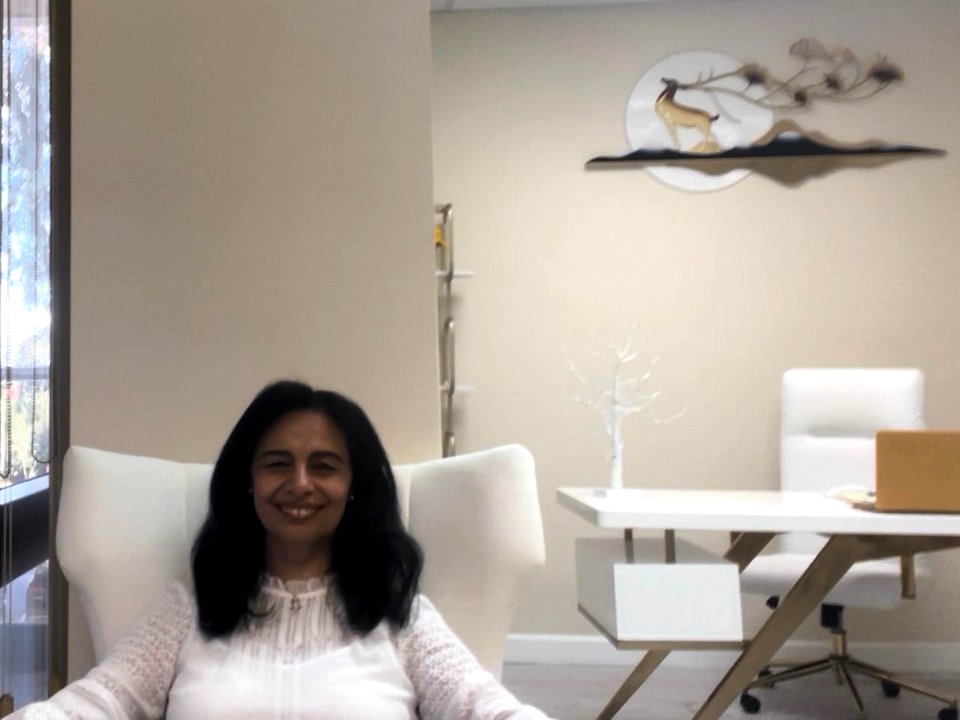
Dr. Behnan in her office
{{ intl.clockTitle }}
{{ ck.city }} {{ ck.time }}

Request a conversation

International conversations happen in a set of reserved weekly windows. Choose your country and check every time that could work for you, shown in your local time. The office will confirm one specific day and time with you.

Times that could work for you (check all that apply)
Only times falling between 6:00 AM and 11:00 PM in your local time are shown. Your selections are added to your message automatically.
Thank you, your message has been sent. The office will get back to you soon.
{{ contactErrText }}

Knowledge

Use Knowledge to understand something. This is a library of hundreds of plain-language answers, written for this practice, about anxiety, depression, grief, trauma, ADHD, testing, and much more. Come here when you have a question: "what is a panic attack?", "does my child have ADHD?", "is this much grief normal?"

Looking to work on something rather than read about it? That is . Wondering whether your symptoms warrant professional attention? That is .

Educational information only, not a diagnosis or medical advice. In a crisis, call 911 or call/text 988.

{{ aiNote }}

{{ group.category }}

{{ item.a }}
Does this touch on something you are dealing with? A free 20-minute conversation is a good next step. Book a free consultation
No answers match that search yet. . Your question may become the next entry.

Self-Help

Use Self-Help to work on something. These are interactive workbooks, written for this practice, that you complete right here in your browser: write in them, check boxes, reflect at your own pace, then print or save your work. Come here when you want to do something about a struggle, understand your own pattern, prepare for an evaluation, or support someone you love.

Want to read answers instead of working through exercises? That is . Wondering whether your symptoms warrant professional attention? That is .

Nothing you type is saved, sent, or stored anywhere. These are self-reflection tools for personal insight, not approved or certified clinical screening tests, and they produce no scores or diagnoses. If something you notice concerns you, bring it to a professional.

Need immediate safety or crisis help?
This is not a questionnaire. Call or text 988 for crisis support, or 911 for a life-threatening emergency.
Open Safety Resource
{{ wb.kind }}
{{ wb.title }}
{{ wb.tagline }}
{{ wb.blurb }}
Open the workbook
All interactive Private, nothing stored Print or save as PDF For adults

Screening Links & Questionnaires

Use Screening Links to check whether something deserves professional attention. These are established, validated questionnaires developed and studied by outside organizations, the same ones clinicians use. Answer a short set of questions and get a score that suggests whether a fuller assessment may be worthwhile. They are screening resources, not diagnoses: a score cannot tell you with certainty whether you do or do not have a condition, and medical concerns, sleep, medication, substance use, stress, culture, and age can all affect how symptoms appear.

Want to understand a topic? That is . Want to work through a struggle at your own pace? That is the practice’s own , which are educational reflection guides.

Need urgent help? This website is not an emergency service and is not monitored. Call or text 988 (Suicide & Crisis Lifeline) or call 911 for a life-threatening emergency. Open Crisis & Safety Help

{{ group.topic }}

{{ s.name }} {{ s.acronym }}
{{ s.purpose }} For: {{ s.population }}.
A score is a starting point, not an answer.
Whatever a questionnaire showed you, the next step is a conversation. Begin with a free 20-minute call with Dr. Behnan or one of her highly qualified team members.
Book a free consultation

Most of these questionnaires open on their owners’ official websites. The ones that begin here are reproduced exactly as published, with attribution, and are scored entirely in your browser. Nothing you answer, here or on an official site, is received, stored, or monitored by this practice.

Contact

You can always reach the office by phone at (818) 636-5357. Online, there are two ways in. Choose the one that fits:

New clients start here
Book your free consultation
A free 20-minute conversation with Dr. Behnan or one of her highly qualified team members: share what brings you, ask questions, and see whether the fit feels right. By video, at a time you choose. Free means free, and there is no obligation to continue.
Everything else
Send us a message
A question, a records request, a referral, or anything that is not a booking: write to the office and they will get back to you. Please do not include sensitive clinical details in messages.
Thank you, your message has been sent. The office will get back to you soon.
{{ contactErrText }}
* Indicates required field

Private Practice Locations

1910 Huntington Drive,
South Pasadena, CA 91030
23734 Valencia Blvd. # 204
Valencia, CA 91355
1424 4th Street,
Santa Monica, CA 90401

Booking questions

{{ item.a }}

What clients say

★★★★★

{{ reviewText }}

{{ reviewWho }}